Abstract
Music groups and artists depend on music media platforms to provide exposure to their work and supply entertainment to the public. Emerging from the 1970s underground New York City punk scene, the Talking Heads was an art-rock band often approached with apprehension due to their idiosyncratic angle towards pop and rock music. Media outlets initially issued uncertain commentary on the group and described them as “outlandish” and “provocative.” Toward the end of the decade, a feud between rock and disco developed, which is partially credited for “new wave” music’s emergence. The Talking Heads was deemed a typical example of a new wave band that challenged the music industry to question what constitutes a band as a new wave artist. While the group contended with the media’s standards for mass media exposure, they achieved commercial success and substantial media exposure despite their abnormal nature. This study examines entertainment media trends of the 1970s and 1980s parallel to the Talking Heads’ unanticipated fame and the media’s response to the changes they brought to popular music.
The 1970s was a culturally vulnerable decade. New York City was a haven for musical artists with profound approaches to their predecessors’ work. Surrounded by the tension between the popularity of disco and the revolt of punk music, underground artists faced the importance of originality. Societies’ definition of “rock and roll” became threatened and questioned the future of popular music. Radio stations flourished with high-tempo, accessible dance music, while the less populated clubs were cycling through punk bands that sparked cult followings, such as the Ramones. The stark contrast between the two genres consisted of their musical qualities and the attitudes supporting them. Disco’s tightly knit grooves and catchy melodies promoted joy, freedom, and black celebration. In contrast, punk music’s raw and loose aggression resembled rock music in its ragged form and focused on its rebellious messages.
Disco’s emergence deterred popular music’s focus from idealistic “rock and roll.” Simultaneously, punk music contributed the same but with different intentions. Punk music was definitive and claimed a distinct role in the music industry, typically composed of anti-patriarchal lyrical themes and bold behavior, accompanied by blistering guitars and rapid drum patterns. Though not as commercially successful or accepted in the same fashion as disco, the punk movement was antithetical to the latter and assisted in the division between the two communities.
The most notable component of the New York punk scene included a sub-genre called “new wave.” Though the label referred to various musical styles adjacent to those possessing distinct definitions, it most commonly referred to compositions partially derived from standard punk influences. New wave typically deviated from the nonconformist intensity that characterized the genre. British punk groups, such as Sex Pistols, portrayed themselves with ferocity in music composition and social identity. New wave bands associated with the punk scene, such as Blondie, the Ramones, or Talking Heads, adopted similar music fundamentals but excluded the alarming attitudes that deprived punk rockers of societal traction. New York City became an expansive refuge for these groups to blur the lines of rock and pop music for the decade to come.
Record labels and radio stations recognized musicians’ worth by discerning their distinguishing qualities. Particularly in New York City, the punk scene morphed into variations of both British bands like Sex Pistols and the works of 1960s New York avant-garde legends, such as the Velvet Underground. Bands such as Television and Blondie resorted to the barebones of garage-rock music but served as a reduction of punk’s intensity. The new wave sub-culture thrived in New York’s iconic club, CBGB, whose notoriety was the home of multiple legendary musicians. Most artists who frequented CBGB were not known for being conventional but by-products of their artistic community and the state of music.
Talking Heads, alongside groups contiguous with their musical classification, achieved commercial success despite their abnormal and atypical approach to the punk scene. At first glance, audiences and media outlets were off-put by the band’s disjointed and nervous energy. Throughout their career, Talking Heads, despite their quirks and irregularities, were awarded cultural infamy amid their more approachable pop and rock contemporaries.
This study aims to understand the media’s priorities in covering artists considered unconventional or obscure, using the Talking Heads as the focal point, between 1976 and 1992, the duration of the group’s career as a collective. Various media outlets such as Rolling Stone, Billboard, the New York Times, and MTV represented eminent music coverage within the designated period. This study attempts to understand the correlation between the band’s success and how their popularity reflects the media’s cultural circumstances.
Literature Review
New wave was a progressive style of music in the eyes of the public. It allowed the capacity to incorporate various musical nuances ranging from blues, funk, dance music, or avant-garde rock. The caveat of being labeled a “new wave” artist pursuing a music career was emphasizing novelty and marketability. Talking Heads was originally a three-piece collective consisting of frontman David Byrne on vocals and guitar, Tina Weymouth as the bassist, and her boyfriend, Chris Frantz, as the drummer. All three parties met as art students at the Rhode Island School of Design but congregated as musicians. After acquiring Jerry Harrison, former guitarist, and keyboardist of the Modern Lovers, Talking Heads prospered as a collective that produced more groundbreaking work than the typical punk residents of CBGB.
The open-ended nature of the late 1970s new wave movement unraveled popular music’s possibilities. Various artists, such as the British group New Order, were initially recognized as the post-punk band Joy Division, created electronic dance music frequented through discotheque speakers. DEVO, an Ohio-based guitar band, expanded on the jitters of punk music, resulting in a jaunty and satirical post-punk discography. As time advanced, the term new wave became commonly used but increasingly arbitrary. Record labels and radio stations upheld distinctive standards and selection requirements to maintain company continuity and originality.
Though the media questioned the new wave movement’s appeal and role in rock history, outlets were responsible for synthesizing this formative era of popular culture. Talking Heads were an unlikely fit for commercial success, but they were a challenge to the media. The association with punk scenes had a negative connotation, yet Talking Heads eventually transcended into cultural icon status. Their authenticity was treasured in the music industry as they became influential in pop music. Narratives resembling Talking Heads warrant inquisition regarding the media’s principles in providing exposure for new artists. How outlandish was too outlandish? Was it accessible? Was it going to benefit the business, readers, or the artists? Was it intriguing enough to open dialogue about it?
The Talking Heads were clean-cut, art students among those boasting black leather jackets and shaggy haircuts, such as Ramones. They were often tagged as a punk band early in their career, but various inflections of their music indicated otherwise. To be a new waver rather than punk was to dismiss rock and roll cliches and supplement nuances derived from rock structures. The term new wave began as a blanket term used by the media and music industry figures to describe genres typically proximate to traditional styles.
Talking Heads, however, were considered postmodernists. Once the 1980s arrived, the new wave’s meaning expanded as it became steadily more eccentric and widely known. The press often applauded the group for their innovative contributions to rock and pop music. While the music industry suffered the tug-of-war nature of rock music and disco in the late 1970s, new wave artists, especially Talking Heads, were placed in the epicenter. In most cases, groups gravitated in different directions. Heads, though they produced dance music throughout their career, the assortment of musical techniques and styles involved with their discography were considered avant-garde. Authenticity was their most vital attribute, but they explored uncharted territory, which occasionally regarded them as esoteric. The importance of this study coalesces with understanding popular music’s role as a social construct in journalistic curation. In this case, media comprehension reveals the mutual impact between society and the press.
Culture & Talking Heads’ Infancy
Variety magazine proposed a cyclical theory that each decade presented a pop music savior, such as Elvis Presley in the 1950s and the Beatles in the 1960s. However, the 1973 article lacked faith for the present decade. In 1979, Vogue magazine proposed the likeness of Bob Dylan and David Byrne, as they were both lyricists representing their time with minds of the future. The music industry was transitioning from the “flower power” era of rock music, and soul and disco were rising. Despite these genres’ popularity, the social implications of their work were racially charged. Black musicians were at a disadvantage if savior status was a possibility. Toward the end of the decade, reactions to rock music’s livelihood and the divisive nature of dance music proved that a savior was needed, but out of sight.
At the beginning of 1976, the New York art club CBGB began to gain popularity for hosting underground rock acts like Television and Talking Heads. Meanwhile, a New York disco membership club, Chameleon, was opened in January of the same year. Disco club chain, the Dimples opened nine new disco clubs in New York the same week, resulting in 34 clubs under the Dimples name. Rock and roll was becoming overshadowed by disco’s trendiness. By the middle of the year, disco’s prevalence overstepped consumerism and presented itself through a surplus of musicians replicating its signature sound. Distinguishing acts from others became more complex, and originality diminished. Listeners craved music that sounded fresh rather than a mimicked product. Though disco music did not disappear in any fashion, its brief rut created opportunities for underground scenes to be recognized.
By 1977, punk giants Sex Pistols appeared on the infamous “Top of the Pops,” a music television program highlighting popular acts. Like disco listeners, record companies found value in punk music’s new found glory and were looking ahead to discover groups ahead of the punk curve. Though British punk achieved popularity first, the spotlight slightly reached New York punk shortly afterward. New York punks were titled “art punks” and “new wavers.” However, neither movement threatened popular acts such as Bee Gees or Fleetwood Mac during the time but rendered enough provocation to open dialogue throughout music media.
Concurrent with the new wave movement’s uprising, Talking Heads released their debut album, “Talking Heads ‘77,” which received high praise from New York Times critics, describing them as “one of the most amusing and serious rock albums ever.” While deterring from the group’s preconceived punk associations, the critic highlighted their emphasis on tight, stiff grooves and Byrne’s shriek-like vocal deliveries. The review predominantly introduced the readers to the band and acknowledged the widespread distaste for art’s position in rock music. However, the writer assured the reader of the album’s innovation and attempted to gain the trust of listeners who listened to Patti Smith or Television. Billboard magazine declared the album a milestone and concurred with the comments of the previous critic.
By the beginning of 1978, Talking Heads made their debut on Billboard’s Hot 100 singles charts at number 98 with their infamous track “Psycho Killer.” Disco declined in New York City as new wave music incited more skepticism. Managing Director of Sire Records, Seymour Stein, defended the empty meaning of labeling bands as new wave and the importance of recognizing their contributions to a generational drift in rock music. Disco was the traditional example of pop music, but the new wave catalog often fluctuated between rock and pop roots among the bands most commonly mentioned. Television was considered masters of their guitar-centric craft, Blondie seamlessly intertwined pop and rock appeals, and Ramones were tried-and-true American rock n’ roll. Meanwhile, Talking Heads were consistently described as cerebral, intelligent, or thought-provoking.
Talking Heads capitalized on their critical acclaim when they released their sophomore album, “More Songs About Buildings and Food,” labeled as “thinking man’s rock.” The album debuted their collaboration with producer and former member of glam-rock group Roxy Music Brian Eno. As a testament to progress, the album’s musicality emphasized parallelism between the bass and drums, as well as slapstick lyricism. Featuring a deeply grooved cover of Al Green’s track “Take Me to the River,” Talking Heads landed their second single on Billboard’s Hot 100 chart. Two months prior, Billboard included the single on their list of recommended songs, most likely contributing to its success. The group received critical acclaim, often referring to musical intelligence, innovation, and Byrne’s strange but fitting vocals.
Positive reception continued with their next Eno-produced “Fear of Music” album in 1979. Featured on Billboard’s top album picks, “Fear of Music” was labeled their strongest LP, despite Byrne’s “irritating” vocals. Considered their most sonically anxious album to date, Talking Heads adopted rhythms frequented in African music. The opening track “I Zimbra” contains repetitive drum patterns and percussive guitar riffs, while Byrne sings lyrics of a German nonsense poem by Hugo Ball. New wave reached a point where it surpassed punk music’s popularity and radio play. One Rolling Stone critic claimed Talking Heads as the best rock band and his favorite, and while they were often criticized for their unconventional approach to rock music, “Fear of Music” warranted significant praise. Approaching the end of a decade where dance music reigned supreme, Talking Heads were on the cusp of profoundly bridging the gap between rock and dance. “I Zimbra” was number 82 on the disco charts of late January 1980.
New Wave Comes of Age
In July of 1979, violence erupted at a Chicago White Sox baseball game. As a promotional tool, Steve Dahl of Chicago rock radio station WLUP coordinated with White Sox owner Ben Veeck and agreed to allow fans with a disco record to enter for a discounted cost of 98 cents and participate in a ceremonial explosion of each record between games. Once the event began, riots and destruction ensued. The field was damaged enough to postpone the upcoming game. Earlier that week, Billboard acknowledged a rise in disco listeners in Chicago. A troubling angle to the Disco Demolition is the variety of non-traditional rock artists who later appeared on the disco charts, such as Talking Heads, Blondie, and the dance-rock band the B-52s. Except for artists like Bee Gees and their blockbuster success with “Saturday Night Fever,”disco became progressively less racially limited. New wave artists and even rock giants like the Rolling Stones flirted with dance music towards the decade’s end. Demolition rebels and Steve Dahl were late to the riot. Though disco was still thriving, the terms that constituted dance music changed, and disc jockeys attempted to understand the genre’s metamorphosis to fulfill their audience’s needs.
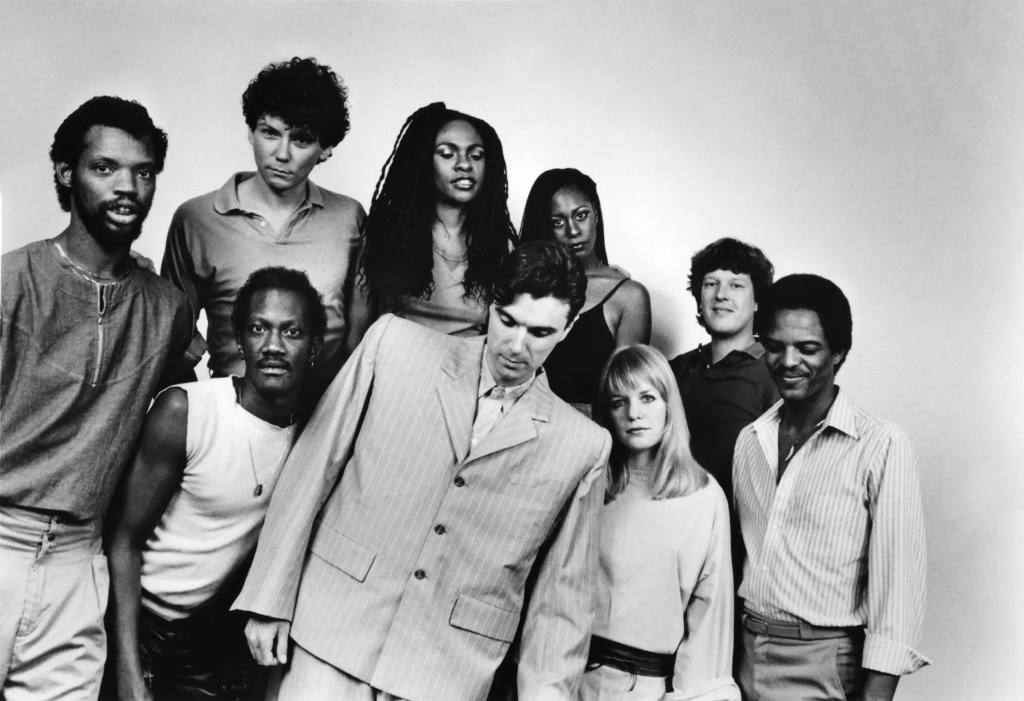
The early 1980s proved to be a sensible time for Talking Heads to produce revolutionary work. “Fear of Music” set high standards for critics and Heads fans, but while the popular music industry was evolving into an unexpected cultural renaissance, they remained ahead of the curve. “Remain in Light” was released in 1980 and jolted Talking Heads further into the spotlight. New wave music was pervasive among young adult crowds, indicative of its universal success. Disco’s gradual decrease in demand did not imply the absence of dance music. Instead, new wavers cultivated an angle that neither detracted nor replicated disco. Talking Heads resumed exploring Afro-beats and practices shown in different denominations of black music, resulting in lively and rhythmic concerts. “Remain in Light” was recorded by multiple instrumentalists, requiring additional live show performers. Former guitarist for Frank Zappa and David Bowie, Adrian Belew joined the lineup, along with keyboardist of Parliament-Funkadelic, Bernie Worrell. Nona Hendryx and Dolette McDonald served as backup singers and dancers, Steve Scales stepped in as a percussionist, and Busta Jones became a supplemental bassist.
The influence of black music on “Remain in Light” denoted appreciation and genuine interest in its complexities rather than imitating or appropriating. Though perceived as provocative, Talking Heads received high regard for crafting profoundly impressive music that simultaneously connects cultures notorious for their divisiveness. The musical compositions on this album rarely isolated any one musician but instead reiterated the power of a collective. Socially speaking, “Remain in Light” was ultimately a sign of the times and considered an instant milestone in music history. Critics’ initial reaction to a Talking Heads concert was to acknowledge the racial differences. The lineup consisted of 5 white and five black people playing rock music that resembled an African party. It was innovative, and individuals of any background could enjoy it. The music industry searched for answers to the chaos surrounding the disco/rock dilemma, and “Remain in Light” was asserted as common ground.
The Sensationalized Eighties
In the 1980s, pop and rock stars were seen nearly as messianic figures. Prince, Michael Jackson, Bruce Springsteen, and Madonna were consistent chart-toppers. Bands in the art scene were replacing their guitars and drums entirely with synthesizers and other electronics or making them the focal point. Rock and dance music remained in favor, but pop culture began to embody a modernistic form. Artists such as Hall and Oates and Duran Duran adjoined the cliche rock star archetypes and music with dance beats. The Human League created synth-centric new wave music with dark undertones, which later became labeled “synth-pop.”
Music television broadcasting (MTV) and visual arts significantly altered the trajectory of the music industry and media. In 1981, MTV aired its first 24-hour broadcast. “Video Killed the Radio Star” by the Buggles was ironically the first video to introduce the television program. While different artists held different experiences, MTV remarkably catalyzed exposure and increased record sales for those featured. The visual aspect of music solidified the identity of musicians who spent copious amounts of time touring to obtain the same effect. Additionally, MTV would host interviews with household names such as Bruce Springsteen, whose first television interview was with MTV video jockey, J.J. Jackson.
Prince and Michael Jackson ruled music media outlets by 1982. Michael Jackson won the hearts of the world with his infamous “Thriller” album, and Prince’s “1999” album was his most successful yet. Both albums were released a month apart and sky-rocketed to the top half of the top LP charts. Two years later, Prince released his album, “Purple Rain,” which presumed the role as the soundtrack to the film under the same title. By October 1984, “Purple Rain” was the number one album sold, with two singles in the top 10. Prince experimented with electronics that elucidated the new wave movement at the turn of the decade, expanding on his already funky, soulful sound. The sonic hybrid that resulted in “Purple Rain” proclaimed a fresh and highly-regarded standard for innovative pop music. Along with other contemporaries, the two iconic pop stars obtained enough publicity to deprive others of the same opportunities.
Talking Heads only released a live album between 1980 and 1983, but the hit single from their most recent studio album, “Once in a Lifetime,” scored heavy air time on MTV. He sang with the cadence of a preacher, performed nonsense choreography, and dressed in nerd clad. Rock radio stations rejected the track because it was considered “too funky,” and R&B was not keen on it. Each band member pursued side projects during the Michael Jackson and Prince craze. Most notable works consisted of Frantz and Weymouth’s funky duo, Tom Tom Club. Their 1981 hit singles “Genius of Love” and “Wordy Rappinghood” reached popularity similar to their work with Talking Heads, but even more so among black audiences. By the end of 1981, the two hip-hop inspired tracks were number 2 on the disco top 80 songs chart.
By 1983, Talking Heads released their first studio album without Eno since their debut. “Speaking in Tongues” was considered a synthesis of their catalog before its release. Billboard reiterated past reviews, noting that the album was sharp, clever, and more accessible, but questions the reasoning behind the band’s insistence on exploring black music. Much of the music Byrne wrote for “Speaking in Tongues” was less anxiety-ridden than what was heard in “Fear of Music” or “Remain in Light” but was a pursuit of whimsical fun. The lead single “Burning Down the House,” made it to the Billboard Hot 100 shortly after its release, as well as the Top Single Picks. A year after the album release, Talking Heads produced “Stop Making Sense,” a live concert album and film directed by Jonathan Demme. The film seamlessly documented clips of four shows following the “Speaking in Tongues” release. Visual stimuli reserved its spot in popular culture in the 1980s, which coerced artists to adjust to the audience’s demands by indulging in the film sector of entertainment media. However, bassist Tina Weymouth claimed they wanted to film the “Stop Making Sense” out of pure enjoyment of the previous tour. Devoid of the usual jitters and spasms, the band surrendered themselves to the music. The film was full of energy. It shared iconic moments, such as Byrne dancing with a lamp, a feature from the Tom Tom Club, and Byrne’s famous oversized suit. “Stop Making Sense” was a representation of the band at its tightest. *This sentence is a bit awkward.
The Talking Heads embarked on an extensive break from tours after “Stop Making Sense” made it to theaters. The film was well received and obtained a spot on the top pop album charts. In 1985, the band reconvened and discussed their upcoming album, “Little Creatures.” The album was a gesture towards the original sound on their debut record which was either seen as lazy or appreciative of their roots. “Little Creatures” was more melodic than rhythmic, but Talking Heads were suffering interpersonal conflicts and the media was fully aware.
It was upon the release of their 1986 album “True Stories” that tensions publicly rose to the surface between the band. Much like “Purple Rain,” the album was the soundtrack to a film written and directed by David Byrne. In a Rolling Stone cover story, the bandmates individually debriefed their qualms. Frantz and Weymouth took issue with the amount of credit and press that surrounded Byrne as if he were the complete mastermind of the group all along. A particular instance of unease for the group’s rhythm section was when Byrne participated in a cover story for Time magazine, dubbed “Rock’s Renaissance Man,” under the tone of a solo artist. Part of the band’s charm was the communal properties that trademarked their live shows and sonically coherent records. The story implied fear of the band dispersing, as the headline questions, “Is America’s Best Band Byrned Out?” The writer used quotes from the band members to portray the narrative rather than unravel an answer and draw a conclusion. The band recorded their final and least favored album “Naked” in 1988, but Byrne announced their disbandment in a 1992 interview with Vox.
Conclusion
The band members continued their solo careers but reunited as a group once they were inducted into the Rock and Roll Hall of Fame in 2002. Joined by their former CBGB natives, the Ramones, Tom Petty and the Heartbreakers, Talking Heads had reached the pinnacle of a career in rock music. By 2019, Byrne had yet to stray from the musical theater industry. At 68, he created a live Broadway production called, “American Utopia.” The production included Byrne, among other musicians who carried their instruments while they performed choreographed dances and sang his original songs, including a few popular Talking Heads tracks. Film and music critics were receptive to Byrne’s musical. They often alluded to “Stop Making Sense” as the performing crew wore monochrome gray suits that favored the color schemes in the 1984 concert film.
In the fall of 2023, “Stop Making Sense” returned to theaters with audio and visual remasters conducted by the entertainment production company A24.Along with the film’s revival, Talking Heads announced a tribute album to “Stop Making Sense,” which entailed covers of the songs shown in the film, performed by modern popular artists of various genres. The film’s release surpassed its initial 1984 box office collections and reached $5 million in revenue. “Stop Making Sense” simultaneously became the highest-grossing event for IMAX theaters. Forty years passed since the film’s debut and modern music lovers demonstrated an equal enthusiasm for its return. In 2006, owner of CBGB, Hilly Krystal announced the club’s foreclosure due to failure to pay rent.The club was the birthplace of numerous innovative musicians, yet failed to endure time. Talking Heads and their fanbase proved the band could sustain their legacy when they revitalized “Stop Making Sense.”
The period in which Talking Heads took form was puzzling for music listeners and even more perplexing for the media to document. Popular culture was in a position deeply susceptible to redirection and growth, which was no surprise by the beginning of the 1980s. Talking Heads’ success aligned with societies’ resilient craving for profundity, excitement, and togetherness. Punk music’s novelty was its outward negligence to rock and roll cliches, while most new wave artists sought ways to change it. The band sounded fresh and unique for their time but yielded timeless and incomparable results. Music media platforms presented the group as modern savants capable of redefining popular music. Though seen as provocative, Talking Heads confronted social constructs and crafted an unforeseen legacy that broadened the entertainment industries’ imagination.
Bibliography
Back Stage, 1960-2000. ProQuest Entertainment Industry Magazine Archive. Accessed from the University of Alabama Library.
Billboard, 1963-2000. ProQuest Entertainment Industry Magazine Archive. Accessed from the University of Alabama Library.
Byrne, David, How Music Works (Crown Press: New York, 2017).
Cateforis, Theodore. Are We Not New Wave?: Modern Pop at the Turn of the 1980s (University of Michigan Press: Ann Arbor, 2011).
Goodwin, Andrew and Lawrence Grossberg. Sound and Vision: The Music Video Reader. New York City: Routledge, 1993.
Howell, John. American Originals: David Byrne. (Thunder’s Mouth Press: New York, 1992)
Los Angeles Times, 1923-1995. ProQuest Entertainment Industry Magazine Archive. Accessed from the University of Alabama Library.
Musician, 1982-1999. ProQuest Entertainment Industry Magazine Archive. Accessed from the University of Alabama Library.
Musician, Player, and Listener. 1977-1982. ProQuest Entertainment Industry Magazine Archive. Accessed from the University of Alabama Library.
New York Times, 1941-1965. ProQuest Historical Newspapers. Accessed from University of Alabama Library.
Reynolds, Simon, “10/Art Attack: Talking Heads, Wire, and Mission.” Essay. In Rip It Up and Start Again (Penguin Books: London, 2006)
Spin, 1985-2000. ProQuest Entertainment Industry Magazine Archive. Accessed from the University of Alabama Library.
The Film Journal, ProQuest Entertainment Industry Magazine Archive. Accessed from the University of Alabama Library.
Variety, 1905-2000. ProQuest Entertainment Industry Magazine Archive. Accessed from the University of Alabama Library.
Vogue, ProQuest The Vogue Archive. Accessed from the University of Alabama Library.
Vox, 1990-1999. ProQuest Entertainment Industry Magazine Archive. Accessed from the University of Alabama Library.


Leave a Reply